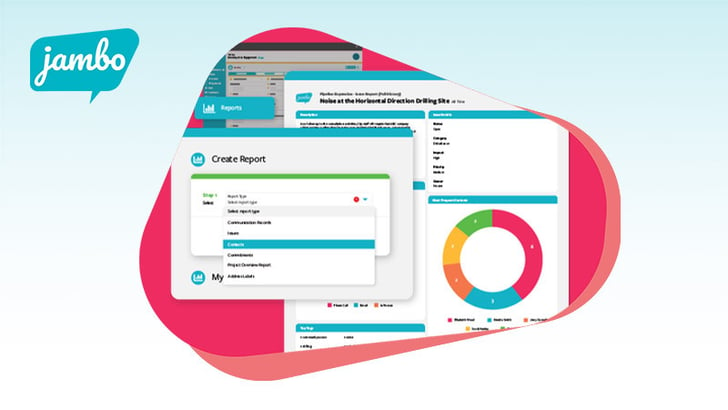
The best stakeholder reporting software depends on your specific organizational size and data complexity. In stakeholder engagement, a report is your evidence of compliance and relationship health. If your team is struggling with stakeholder reporting, it's a more common problem than you'd think. Across regulated industries, government departments, and infrastructure projects, demand for structured, defensible reports has grown, yet most teams are still trying to meet it without the right stakeholder reporting software
The teams we talk to describe it the same way: "It's becoming unmanageable." "Creating reports is impossible." "It takes forever."
Whether you're managing consultation for a mine permitting process, tracking community engagement across an infrastructure corridor, or presenting ESG outcomes to a board, you need to choose the best stakeholder reporting software that produces accurate, timely reports.
This post covers four stakeholder reporting software solutions that solve that reporting gap. We've organized them by whom they're built for, so you can quickly identify which fits your context.
The best stakeholder reporting software comparison table
| Software | Best for | Reporting style |
| Jambo | Government, energy, mining, infrastructure, forestry, and healthcare teams | Engagement-focused: interactions, issues, commitments, sentiment |
| Quorum | Public affairs and government relations teams | Advocacy-focused: legislative tracking, stakeholder influence |
| Engagement Hub | Community consultation and public participation | Online engagement-focused: participation analytics, feedback themes |
| ProjectManager | Cross-industry project teams needing structured stakeholder updates | Project-focused: dashboards, status reports, resource and budget tracking |
Also, compare Jambo vs Open Point for stakeholder reporting→
The problems stakeholder reporting software solves
Before you compare features, it helps to be clear on the problem you're solving.
We pulled the pain points from more than 120 recent inbound qualification calls with teams evaluating stakeholder relationship management software. The reporting problems were remarkably consistent.
-
The most common: You can't produce a report. Not a slow or inaccurate report, but no report at all. Teams running on spreadsheets and emails described it plainly: "no reporting capabilities," "creating reports is impossible," "it's becoming unmanageable to do any real analysis." One person called their spreadsheet setup "building with toothpicks." This came up on roughly 59% of calls, making weak or nonexistent reporting the second-most-frequently cited pain point overall (spreadsheet sprawl was first, at around 85%).
-
The second version of the problem: You have a tool, but you can't report out of it. Plenty of teams we spoke to were already paying for software such as a CRM, another stakeholder management platform, or an in-house-built system, yet still weren't getting the reporting they needed. Reports were "confusing," or "cumbersome," took "forever to create," or simply couldn't surface the right data. One team described having five to seven people entering data into their platform, then finding it "difficult to report on" the data. Paying for a system and still doing reporting manually is its own kind of frustrating.
-
The third and most urgent version: Reporting is an obligation. For a significant share of the teams we spoke to, stakeholder reporting is a compliance requirement. ESG reporting for a multi-billion-dollar offshore project. Audit-ready records for permitting. Reports to the Saskatchewan Environmental Assessment branch. Documentation for Indigenous consultation obligations. IFC standards compliance. Federal government submissions. These aren't reports you can produce with a pivot table; they need to be defensible, complete, and traceable to a full engagement record.
-
Then there's the reporting you owe to your own organization: Boards want to know engagement is on track. C-suites want year-end summaries. Executives want historical engagement records they can actually read. One team described getting to year-end and having "trouble reporting on anything." Another was being asked for "more tracking and reporting," but had nothing in their spreadsheets to pull from.
-
Underneath all of this is the data problem: Reporting fails when the underlying data is scattered, inconsistent, or living in people's heads. When different departments track engagement their own way, when commitments go unrecorded, when staff turnover takes institutional knowledge with it, no reporting tool can fix that if the foundation isn't there. Good stakeholder reporting software addresses both sides: it structures how you capture engagement and turns that structure into reports you can use.
If two or three of those problems sound familiar, the tools below were built for you.
Explore our checklist for producing stakeholder engagement reports →

The reporting dependency chain
1. Centralize data - 2. Map influence - 3. Track actions - 4. Generate report
-
Step 1: Centralize data: The software must first gather inputs (emails, meeting notes, complaints). Without this, your report is empty.
-
Step 2: Map influence: The software categorizes who the data belongs to. Without this, your report can't filter by "High Influence" or "Local Resident."
-
Step 3: Track actions: The system monitors what your team did about the data, such as resolving a grievance. Without this, your report has no progress to show
-
Step 4: Generate report: This is the grand finale. The software instantly compiles steps 1, 2, and 3 into a visual dashboard, a CSV file, or a PDF.
4 best software stakeholder reporting
The following are some of the best software to use when reporting how you engaged with stakeholders, Rights Holders and communities:
Jambo
Best for: Government, energy, mining, renewable energy, infrastructure, forestry, and healthcare teams
Jambo is stakeholder relationship management (SRM) software used by governments and regulated industries to track, manage, and report on all stakeholder engagement. It's the strongest choice for teams that need defensible records of every interaction and are regularly asked to report on their engagement to executives, regulators, funders, or government bodies.
What makes Jambo's reporting stand out
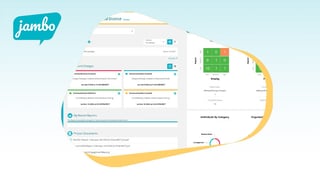
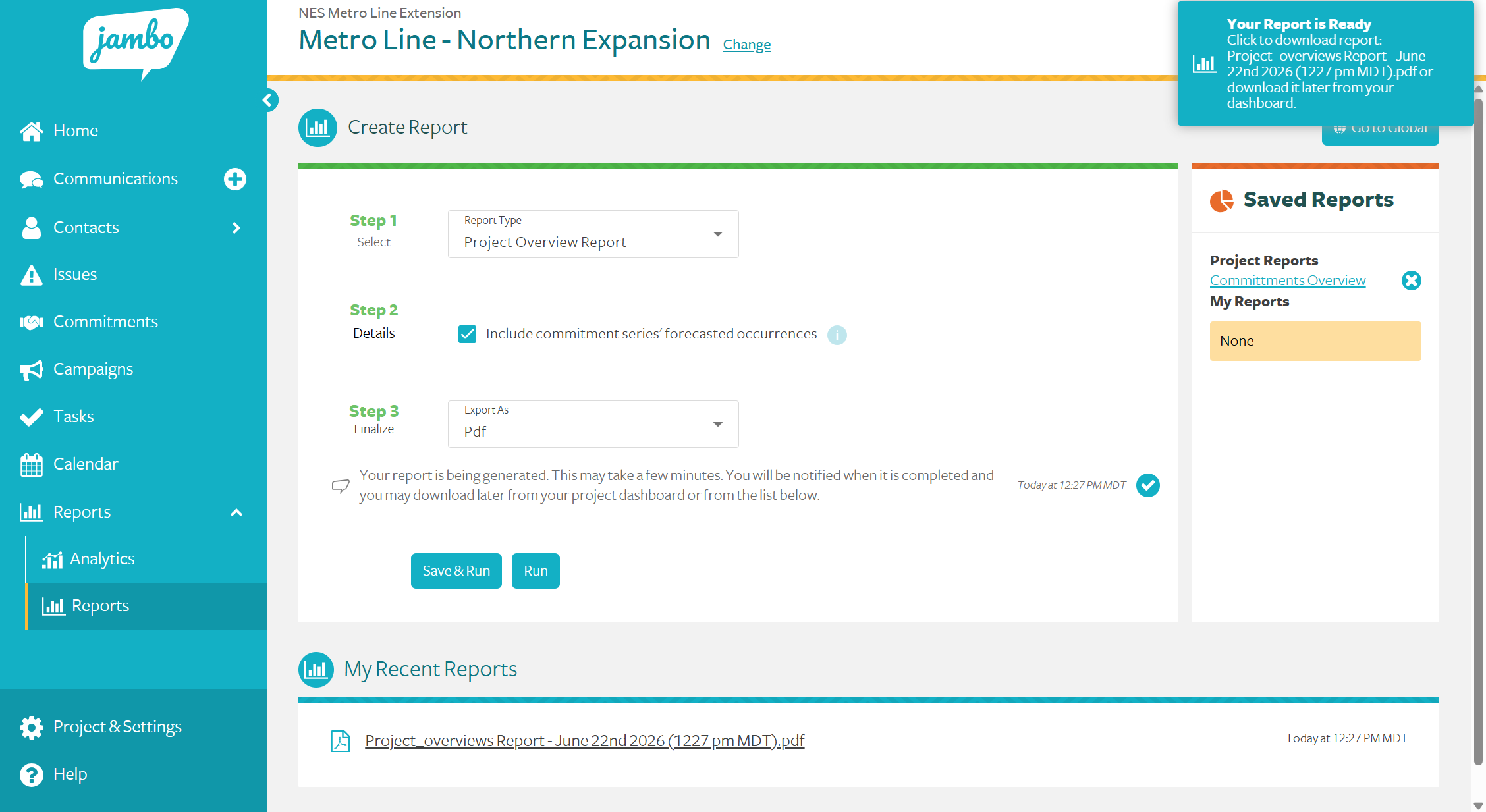
Jambo's reporting is built around the same data structure that drives the rest of the platform. Every interaction, issue, commitment, and task logged by your team flows directly into reports, so there's no reformatting, no copy-pasting, and no discrepancy between what your team tracked and what ends up in a report.
Key reporting capabilities include
1. Pre-built and custom reports in seconds
Create summarized or comprehensive reports in CSV or PDF with a few clicks. We have pre-built templates available, or you can filter and configure your own. Teams dealing with regulatory timelines or board deadlines don't have time to spend hours pulling together a report.
2. Issue and commitment reporting
Log stakeholder issues and track them through to resolution with an issues timeline. Weekly reports on issue status, historical engagement records for executives, and progress reports for regulators are all generated from the same underlying data.
3. Sentiment reporting
Capture and track stakeholder sentiment (positive, neutral, negative) on every communication record. Jambo's AI Sentiment feature can analyze communication notes and automatically assign sentiment values, providing teams with evidence-based reporting on how community relationships are evolving.
4. Analytics and custom dashboards
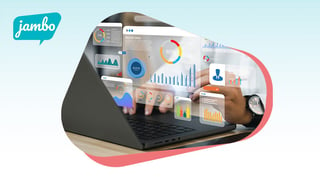
Build line, bar, and pie charts from your engagement data. Monitor KPIs like total interactions, task completion, and issue resolution time. Custom dashboards can be configured per project, named, saved, and shared with other users. Data visualizations of the analysis can be exported and used in PowerPoints or other reports to visually explain data
5. Global view for multi-project reporting
Jambo's Global View lets you report across all projects simultaneously. Useful for organizations running multiple concurrent consultations or engagement programs.
6. Bilingual reporting
Jambo supports both English and French across all interface elements. A single report can display both languages, a requirement that frequently arises in Canadian federal and provincial contexts, and most French-speaking countries worldwide.
7. Audit-ready records
Every change to a record is tracked in a full activity log, including who created it, who edited it, when, and what changed. This change history and audit trail are critical for teams subject to regulatory review, ATIP/FOI requests, or duty-to-consult documentation requirements.
8. Pre-built ACO reports
Jambo can automatically generate Aboriginal Consultation Office (ACO) reports that log your records of consultation (ROCs) and are formatted to meet the Government of Alberta's requirements for First Nations and Métis consultation. For teams managing duty-to-consult obligations in Alberta, this removes the manual work of compiling and reformatting consultation records to meet the ACO's expected structure. Each report is built from the same engagement data your team already logs, so your ROCs stay accurate and traceable back to source records.
9. Permission-based reporting
Reports respect each user's permission level. If a team member doesn't have permission to view confidential information, that information won't appear in any report they generate. This means sensitive records, restricted projects, or confidential stakeholder details stay protected even as reporting is distributed across a team, which matters for organizations handling ATIP/FOI-sensitive data or confidential Indigenous consultation records.
Who Jambo is for
Jambo is used by government departments managing public consultation, mining and energy companies tracking Indigenous engagement and permitting obligations, infrastructure project teams, forestry operators, healthcare organizations, and renewable energy developers. Jambo is flexible enough to support organizations outside these core sectors as well.
Our challenge was to find a centralized engagement system that all departments could use to maintain a historical record of our company's engagement, including tracking our interactions, commitments, and progress with communities to ensure accountability … What I really like about the Jambo is how user-friendly and simple it is," says Josh Magnusson, former Indigenous Relations Coordinator, at Mercer Peace River.
Explore Jambo's features

Quorum
Best for: Public affairs, government relations, and advocacy teams
Quorum is a public affairs platform built specifically for teams managing relationships with legislators, government staff, and policy influencers. It combines a CRM for stakeholder management with legislative tracking, grassroots advocacy, PAC management, and advanced reporting across the full scope of a government affairs program.
What makes Quorum's reporting stand out:
Quorum's reporting is built around measuring the impact of public affairs activity. The platform tracks stakeholder interactions from email opens to RSVPs and meetings and helps present that data in reporting designed to demonstrate influence and justify investment in advocacy programs.
Key reporting capabilities include
1. Interaction tracking across all touchpoints
Every engagement, such as emails, meetings, events, and calls, is logged and connected to the relevant stakeholder. Reporting can be filtered and segmented by stakeholder type, issue, geography, or time period.
2. Impact reports
Quorum's Impact Reports product (available as an add-on) generates shareable summaries of your organization's public affairs activity for leadership and boards, useful for C-suite reporting where the audience wants outcomes, not raw data.
3. Legislative tracking integration
Because Quorum also monitors legislation across Congress, all 50 US states, and the EU, stakeholder engagement reporting can be tied directly to relevant legislative developments, giving government affairs teams a way to connect their relationship activity to policy outcomes.
Who Quorum is for
Quorum is built for government affairs and public affairs professionals in the United States and the EU who need to manage legislative relationships, run advocacy campaigns, and demonstrate the value of their leadership engagement. It's not designed for community consultation, environmental permitting, or the types of regulatory stakeholder reporting common in sectors like mining or infrastructure. For those needs, Jambo is a better fit.

Engagement Hub
Best for: Community consultation teams running online public participation programs
Engagement Hub is an online engagement platform built for public consultation. It combines community participation tools (forums, surveys, idea boards, interactive maps) with reporting focused on measuring the depth and demographics of that participation. It's used extensively by local government and community-facing organizations in Australia and New Zealand.
What makes Engagement Hub's reporting stand out
Engagement Hub's reporting is built around participation data, including who engaged, how deeply they engaged, what they said, and where they're from. If you're running a public consultation that involves a registered community audience and you need to report on the breadth of participation and the themes in qualitative feedback, it delivers a high degree of analytical depth.
Key reporting capabilities include
1. Pre-built insights reports
Covering project activity, user segmentation, top influencers, offline participants, feedback text analysis, segment comparisons, project sentiment, and more. All are customizable by date range, segment, or colour scheme, and can be downloaded in CSV, PDF, Word, Excel, or image formats.
2. Project-level reporting
Select a project and see how it's performing: contributions, follower counts, engagement level, ideas posted, stakeholder heat maps by location, and themes in feedback identified through text analysis.
3. Stakeholder demographic reporting
Registered users by age, gender, suburb, and household composition, useful for demonstrating the representativeness of a consultation to funders or oversight bodies.
4. Sentiment and thematic analysis
In-built sentiment tracking across the platform, plus tag-based feedback analysis that lets teams categorize and visualize qualitative responses at scale.
5. Productivity reporting and Google Analytics (GA4) integration
Team activity reporting tracks time on-site, tasks completed, and project load for each team member. This is useful for internal reporting on engagement program resourcing. It also connects participation data with site traffic data for a fuller picture of reach and acquisition.
Who the Engagement Hub is for
Engagement Hub is the right fit for community engagement teams in Australia or New Zealand whose primary reporting need is to understand and communicate the depth of public participation in online consultation programs, such as councils, transport agencies, planning departments, and utilities running structured public engagement processes. It's less suited for organizations that need to report on private stakeholder relationship management, regulatory compliance documentation, or the kind of interaction-by-interaction tracking required for duty-to-consult or permitting contexts.
ProjectManager
Best for: Cross-industry project teams that need to report on project performance to stakeholders
ProjectManager is an online project and portfolio management platform used by teams in construction, IT, manufacturing, professional services, and beyond. It's for project managers who need to produce structured, visually clear progress reports for stakeholders.
What makes ProjectManager's reporting stand out
ProjectManager's reporting is built around project performance data and presents that data in real time through dashboards and a range of pre-built report types. The focus is on keeping internal and external stakeholders informed about where a project stands, what's at risk, and whether delivery is on track.
Key reporting capabilities include
1. Pre-built stakeholder report types
ProjectManager covers the reporting formats project teams most commonly need, including project status reports, progress reports, stakeholder analysis reports, risk assessment reports, cost-benefit analysis reports, resource utilization reports, and more. Each can be filtered by team, project, or timeline and exported for sharing.
2. Portfolio-level reporting
Organizations running multiple concurrent projects can view performance across the full portfolio. Useful for leadership teams that need a consolidated picture rather than project-by-project updates.
3. Budget and resource reporting
Cost-tracking tools show actual versus planned expenditures, and workload charts surface resource-allocation issues before they affect delivery. Financial reporting sits alongside progress reporting in the same platform.
Who ProjectManager is for
ProjectManager is the right fit for project managers in construction, IT, manufacturing, or professional services who need to produce regular, structured progress reports for internal stakeholders, leadership, or clients. Its strength is project performance reporting, including timelines, costs, risks, and resource use. It's not designed for the kind of relationship-based, consultation-specific reporting required in regulatory, permitting, or community engagement contexts. For those, a stakeholder reporting software like Jambo is the better fit.
How to choose the right software for stakeholder reporting
The right tool depends on what you're being asked to report on and to whom. If you need to report on whom you engaged, what was said, what commitments were made, and what issues remain open, and that report might end up in front of a regulator, a funder, or an Indigenous consultation record, you need a purpose-built SRM like Jambo. The reporting is only as good as the data behind it, and Jambo is built from the ground up to capture that data reliably.
If your team works in US or EU government affairs and you need to connect relationship tracking to legislative outcomes and advocacy ROI, Quorum is a good fit.
If you're running online public participation programs in Australia or New Zealand and your reporting audience wants to understand community participation trends and demographics, Engagement Hub covers that well.
You can also learn about the importance of stakeholder engagement reporting →
Want to see how Jambo handles stakeholder reporting?
Jambo is trusted by government teams and agencies, as well as leading organizations in energy, mining, infrastructure, forestry, and healthcare worldwide. If your team is being asked to report more to executives, regulators, or government bodies, and your current tools aren't keeping up, a 15-minute call is the fastest way to determine whether Jambo is the right fit.