Most engagement problems start in the weeks before your stakeholder meeting, when teams skip the research and show up without context. They ask questions that the community has already answered. They miss cultural protocols. They send emails at the wrong time to the wrong people and wonder why nobody responds.
This guide covers what you should know about your stakeholders before you meet them, where to find that information, and how to organize it so it gets used.
What goes wrong when you don't know your stakeholders
Teams that skip stakeholder research tend to run into the same problems:
-
Engagement fatigue: Stakeholders get asked the same questions by multiple team members because no one has documented what's already been learned.
-
Low turnout and poor participation: Sessions are scheduled at inconvenient times, held in inaccessible formats, or lack translation support and stakeholders simply don't show up.
-
Missed concerns: A stakeholder who raised a noise issue in a previous round brings it up again at a public meeting because it wasn't acknowledged during planning. Now it's a flashpoint.
- Broken trust: Communities notice when an organization hasn't done its homework. It signals that their input isn't valued before any conversation has even started.
Learn how to identify your stakeholders in this comprehensive post →
What to do before meeting with stakeholders
The pre-engagement stage
Think about engaging before you engage (i.e., the pre-engagement stage). In this pre-engagement stage, you can use various research methods to determine your stakeholders' values, interests, and what they need from you to communicate with you more effectively.
You'll want to do some research around considerations like:
- If there are any cultural considerations and important protocols to follow
- How best to communicate (e.g., do you need a translator?)
- Any set beliefs or attitudes already established towards the project (this can help you decide what key messages to prepare)
- Are your planned sessions accessible? (How can you reduce barriers to engagement?)
With this kind of information, you can communicate more effectively and show your stakeholders that you value their time, input, and relationships.
Remember, your stakeholder relationships are just like any relationship. The more you know about someone, the more meaningfully you can communicate with them.
Where to find information about your stakeholders
1. Reach out to community advocates and partners
Start with your existing relationships. Community advocates and local partners often have deep contextual knowledge that no public database can provide. If you're engaging in a new region or with a community you haven't worked with before, ask if there is an established organization or liaison who can help orient you. These relationships also indicate good faith.
2. Search online for communication best practices
You can search for general guidance on communicating with your specific stakeholder groups. For example: "best time to contact municipal elected officials" or "how to engage with Indigenous communities in consultation processes." Each stakeholder group has its own rhythm - office workers, stay-at-home parents, shift workers, volunteers - and there's usually public guidance available. Treat this as a starting point, not a rule.
3. Use public census and demographic data
Public census data can tell you a great deal about the communities you're engaging with, such as age distribution, languages spoken at home, employment sectors, and more. Use this to inform your planning (e.g., if a significant portion of the community speaks a language other than English, translation should be a default, not an afterthought).
Important caveat: treat census data as working assumptions to test, not as facts to rely on. The goal of engagement is to understand individuals, and demographic averages will not represent everyone.
4. Search social media and online communities
Social media is one of the fastest ways to understand what a community is currently talking about. Search by location, hashtag, or keyword on platforms like LinkedIn (for professional and organizational stakeholders), X/Twitter (for public discourse and advocacy groups), and Facebook (for community groups and local conversations). You're not profiling individuals; instead, you're listening for themes, concerns, and sentiment at a community level.
Example: Before engaging a rural community on an energy infrastructure project, a search of local Facebook groups might reveal that a recent company incident has created tension. This information should directly shape your key messages and communication approach.
5. Talk to your own team
Don't overlook internal knowledge. If your organization has engaged with these stakeholders before, someone on your team likely has context that isn't written down anywhere. Capture it before you go in. Ask specifically: What concerns came up last time? Were there any commitments made? Any relationships that went well or badly?
6. Search news and broadcast media
News websites and regional TV archives are valuable sources of stakeholder context. Search for the community name, project name, or key stakeholder names. You may find stories that reveal previously raised concerns, previous consultation processes, or community history that's directly relevant to your engagement.
Questions you should ask your stakeholders
Whether you send a pre-engagement survey, include questions in an intake form, or work them into your first conversation, building a full stakeholder profile through direct questions is invaluable.
Here are questions worth asking, organized by purpose:
Communication preferences
- What is your preferred name?
- What is the best way to reach you - email, phone, or something else?
- What is the best day and time to contact you?
- Do you prefer virtual meetings, in-person, or phone calls?
- How do you feel about surveys to share your input?
Roles and representation
- Are you participating as an individual community member or as a representative of an organization?
- If representing an organization, which one, and what is your role there?
- Who else from your organization or network should we be in contact with?
Interests and concerns
- What interests you about this project?
- Are there aspects of this project that concern you?
- Have you been involved in previous consultations or engagement processes on related projects?
- Is there anything you'd like us to know before we meet?
Accessibility and logistics
- Are there any accessibility needs we should accommodate for meetings or events?
- Do you require materials in a language other than English?
- Knowing whether a stakeholder is attending in their capacity as a private citizen or as part of their job also matters.
A representative from a provincial environmental agency will likely be available during business hours, will focus on policy and regulatory questions, and may need to report back to a supervisor. A community volunteer will have different time constraints and different motivations. Both are valuable, but they need to be engaged differently.

Using what you've learned about your stakeholders
Collecting this information only pays off if you use it. Here's what that looks like in practice:
-
Example 1: You check a stakeholder's profile before a meeting and see that she's a volunteer with a local watershed group and isn't being paid to attend. As a gesture of respect, you provide a meal during the session and explicitly acknowledge her time in your opening remarks. She notices.
-
Example 2: A stakeholder raised a concern about project noise levels in an engagement two years ago. Your team logged it in your SRM. Before a new round of engagement, you review his profile and build a noise-mitigation update into your key messages, so he doesn't have to ask again. He walks away feeling heard rather than ignored.
-
Example 3: You're preparing for a public open house. A search of your stakeholder profiles shows that three attendees speak Cree as their primary language. You arrange for a Cree-speaking community liaison to be present. Attendance from that community doubles compared to the previous session.
The pattern is the same across all three: information gathered early, stored well, and applied deliberately creates better outcomes at every stage.
Organizing stakeholder information: why SRM software matters
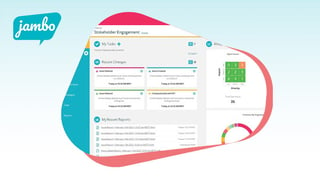
The more stakeholders you manage, the harder it becomes to keep this information accessible and up to date in spreadsheets or general CRMs. Stakeholder Relationship Management (SRM) software is built specifically for this need.
A good SRM with a stakeholder profiles module lets you:
- Store all information about a stakeholder in one place (contact details, role, communication preferences, interests, and accessibility needs).
- Log every interaction and link it to the individual's profile
- Track issues they've raised and commitments made to them
- See their full engagement history briefly before any meeting
Because profiles are accessible to your whole team, you eliminate the problem of institutional knowledge living in one person's head (or inbox). Anyone preparing for a meeting can pull up a profile and get up to speed in minutes. Stakeholders stop being asked the same questions again.
SRM software also handles the reality that stakeholders often wear multiple hats. Someone can be an employee of a regional authority, a member of a local residents' association, and a board member of a nonprofit, all at once. Their interests and concerns shift depending on which role they're representing on a given day. A good SRM lets you track these roles separately and tie each engagement to the relevant role, giving you a richer, more accurate picture.
Why not just use a CRM?
Customer Relationship Management (CRM) tools are built around sales pipelines and customer journeys. They don't have the concepts that stakeholder engagement teams need: issues tracking, commitments, consultation records, or the ability to link a person to multiple community roles. An SRM is built from the ground up for this work. For more on the differences, see our CRM vs. SRM comparison.

The return on investment of an SRM
Pre-engagement research takes time. But the alternative, showing up unprepared, making avoidable mistakes, rebuilding broken trust, takes far more. Teams that invest in understanding their stakeholders before they engage build relationships that hold up under pressure, produce more constructive consultations, and reduce the risk of surprises that could derail a project at a critical stage.
The goal isn't to know everything before you walk in. It's about walking in with enough context to show your stakeholders that you see them as individuals, not just names on an attendance list.
Sarah Hope is Head of Customer Success at Jambo and has over 8 years of experience in stakeholder engagement.