Stakeholder management strategy provides a practical guide for understanding and addressing the interests and concerns of everyone with a stake in an organization's success. A clear strategy helps you identify your stakeholders, understand their needs and influence, and create a structured plan to engage with them.
In this guide, we'll explain stakeholder management strategy, how to build one, the most effective strategies you can use, and how to improve your approach over time. We have also included a free stakeholder management strategy template to help you put these ideas into action right away.
What is a stakeholder management strategy?
A stakeholder management strategy is a clear plan that helps organizations identify their stakeholders, understand their needs and influence, decide whom to focus on, and build positive relationships with them. It guides how the organization communicates and works with every group or individual who can affect or be affected by its actions. By doing this, organizations can reach their goals while creating value for everyone involved.
How to develop a stakeholder management strategy
An effective stakeholder management strategy helps ensure that key supporters remain engaged, risks are managed proactively, and potential obstacles are addressed early. The following steps can help you develop a stakeholder management strategy:
Step 1: Define the purpose and outcomes
Clarify your organization's mission, project scope, key milestones, and decisions that require stakeholder input. Then, create a short statement outlining what you need from stakeholders (approvals, resources, insight, advocacy).
Step 2: Identify stakeholders
List everyone who can affect or be affected by your work: beneficiaries, community leaders, employees, volunteers, suppliers, funders, regulators, partner NGOs, media, government bodies, sponsors, partners, and more. You can do this through stakeholder mapping exercises, organizing workshops, document review, team interviews, community outreach, and "snowballing" (ask each contact who else should be involved).

Step 3: Analyze and profile stakeholders
This identifies who matters, what they want, and where risks/opportunities lie. You can use a stakeholder analysis table for this purpose.
For each stakeholder, capture:
- Stakeholder: name of the group or individual.
- Contact person: the primary individual you will be in contact with.
- Role: their link to the project (sponsor, beneficiary, regulator, delivery partner, influencer).
- Power (H/L): their ability to affect decisions, resources, or policy.
- Interest (H/L): how much they care about the project's outcomes.
- Requirements: What do they need from you (data, services, compliance, benefits)?
- Concerns: risks, objections, constraints, or sensitivities.
Step 4: Map and prioritize stakeholders (stakeholder mapping)
Plot each stakeholder on a power–interest grid using the H/L scores from your analysis table. The map turns data into priorities, so you can aim effort and resources where they matter most.
- High power–high interest: Manage closely (co-create, frequent two-way engagement).
- High power–low interest: Keep satisfied (concise updates, involved in key decisions).
- Low power–high interest: Keep informed (transparent, regular updates, feedback channels).
- Low power–low interest: Monitor (light-touch communications; watch for changes).

Step 5: Set engagement objectives by segment
For each quadrant (and for any critical individual), define the goal of engagement. Examples of goals are securing funding commitment, obtaining regulatory approval, building community trust, aligning a delivery partner, reducing opposition, and collecting beneficiary feedback. Make objectives specific and measurable (e.g., "Obtain MoU signature by November 30").
Step 6: Design tactics, messages, and the communication schedule
Translate objectives into concrete actions. This helps the right person say the right thing to the right stakeholder at the right time.
- Stakeholder: name or segment.
- Method of communication: The right mix of stakeholder communication methods depends on your audience, message, and urgency. Common ones include: 1:1 meetings, community forums, co-design workshops, emails, newsletters, social posts, reports, WhatsApp/Slack, and press briefings.
- Frequency (how often): weekly, monthly, at milestones, ad hoc on risk triggers.
- Responsibility (who): name the owner (project lead, community liaison, CEO, comms officer).
- Notes: key messages, preferred channel, accessibility needs, decision dates, risk triggers, translation needs, and promised follow-ups.

Step 7: Govern the relationships
Assign clear ownership (who maintains each relationship) and define escalation paths for issues and decision bottlenecks. Align with internal roles (e.g., RACI for major milestones). Execute, monitor, and adapt by making it continuous.
Step 8: Track interactions, commitments, and sentiment
Review both tables and the map at a set frequency, such as monthly or whenever the context changes. As stakeholders shift, update power/interest ratings, requirements, concerns, and communication frequencies.
Step 9: Measure success
You can use indicators such as approval/decision lead time, attendance/participation, engagement response rates, satisfaction or sentiment, number of risks mitigated through engagement, advocacy/support gained, and co-created deliverables completed.
Learn how to manage your stakeholder relationships with proven frameworks and tools →
Stakeholder management strategy template
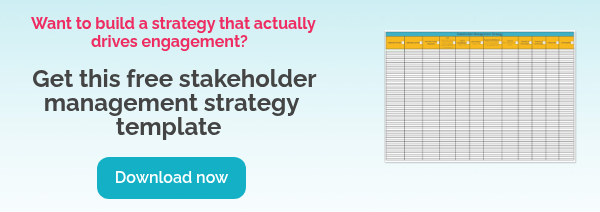
We have provided a stakeholder management strategy template to help you move from a list of stakeholders to clear objectives, communication methods, cadence, owners, and measures.
What are innovative stakeholder management strategies?
The following are some innovative stakeholder management strategies you can adopt across different industries.
1. Rotate a stakeholder advocate role
Rotate a stakeholder advocate role within your project team. Appoint someone responsible for each month or project phase to represent stakeholder interests during internal decision-making. This advocate attends key meetings, reviews strategy and communications from the stakeholder's perspective, and can flag decisions that might create misalignment or risk. Rotating the role ensures fresh viewpoints, builds empathy across your team, and reduces tunnel vision, helping your project stay genuinely responsive to changing stakeholder needs.
2. Establish a commitment tracking scorecard
Establish a commitment-tracking scorecard that transparently displays all promises, deliverables, and follow-ups made to or by stakeholders, assigning ownership, due dates, and status to each. Regularly review this living document in project meetings and share relevant sections with appropriate stakeholders.
This approach turns abstract commitments into actionable items, reduces the risk of forgotten promises, and creates accountability throughout the team. It also provides an auditable trail that strengthens trust, supports compliance, and makes it easy to spot and resolve bottlenecks before they become issues.
3. Co-create sessions with stakeholders
Co-create what-if scenario sessions with stakeholders to collaboratively explore potential future challenges, risks, and opportunities for the project. Rather than just presenting plans and asking for feedback, invite stakeholders to help brainstorm responses to hypothetical situations such as policy changes, funding delays, or unexpected market shifts. This fosters shared ownership of risk management, reveals creative solutions, and helps stakeholders feel invested in contingency planning, rather than merely accepting the status quo.
4. Implement shadowing days
Implement "stakeholder shadowing" days, where project team members spend time directly observing or participating in stakeholders' daily environments. This insider perspective builds empathy, reveals operational challenges and motivators that may not come up in meetings, and helps your team tailor project solutions to real-world needs. Shadowing also fosters trust, as stakeholders see a genuine effort to understand their context, often resulting in more meaningful partnerships and better project outcomes.
5. Host reverse briefings
Host "reverse briefings" in which stakeholders present their understanding of project goals, challenges, and roles back to you. This technique uncovers misalignments early, surfaces hidden concerns, and helps ensure accurate two-way communication rather than just passive information sharing. It also empowers stakeholders by making them active participants and can immediately reveal innovative ideas or overlooked risks.
6. Map stakeholder influence networks
Map stakeholder influence networks to identify hidden champions and potential blockers. Go beyond organizational charts and utilize workshops or digital mapping tools to visualize informal influencers, alliances, and communication pathways, thereby engaging the right people at critical moments. This helps you engage the prominent decision-makers and spot and cultivate support from less visible stakeholders who can significantly contribute to your project's success.
7. Use stakeholder pulse check
Use "stakeholder pulse check" mini-surveys at regular internal project milestones, not just for external engagement. Before key project meetings or decisions, have each team member quickly rate (anonymously, if helpful) their perception of current stakeholder sentiment, top concerns, and unresolved issues. Compare internal perspectives to actual stakeholder feedback to spot gaps in understanding or emerging blind spots. This sharpens team focus and serves as an early warning system to recalibrate engagement efforts or priorities before issues escalate externally.
Stakeholder pulse checks are short, focused mini-surveys that quickly gauge sentiment, clarity, and risks. Avoid reserving them only for external audiences. Run them internally at key project milestones to align your team, sponsors, and support functions.
8. Create a stakeholder escalation matrix
Develop a clearly documented escalation pathway for handling stakeholder issues or conflicts before they become major obstacles. The escalation matrix should specify levels of issue severity, communication protocols, responsible team members for each stage, and when to involve senior leadership, legal, or external advisors.
For example, the frontline project manager might handle a minor concern. Still, a recurring complaint from a high-influence stakeholder would escalate to the executive sponsor with a rapid response timeline. This system streamlines conflict resolution, ensures transparency, and reassures the team that challenging situations will be managed consistently and professionally.
9. Create a stakeholder management skills matrix
Construct a visual matrix that maps each project or stakeholder management team member to their strengths in key stakeholder management skills, such as negotiation, technical knowledge, cross-cultural competence, conflict resolution, or legal expertise. This tool allows project leaders to strategically assign or pair team members with stakeholders, rather than just by convenience. It also identifies skills gaps, informing future training and hiring decisions. Over time, as team members grow, your matrix becomes a living tool that ensures your team's management capabilities keep pace with the complexity of your stakeholder landscape.
Explore different stakeholder management skills to learn and manage your stakeholders effectively →
10. Create a stakeholder compliance calendar
In government or regulated environments, deadlines for public consultations, regulatory disclosures, and formal responses are critical. Create a compliance calendar specifically for stakeholder management. This calendar, maintained centrally and reviewed in team meetings, lists key reporting dates, consultation periods, and follow-up milestones for every regulatory and high-value stakeholder group. Assign clear ownership for each item and incorporate reminder systems. This approach avoids last-minute scrambles, enhances public trust, and demonstrates that your team is managing obligations with rigour and transparency.
11. Stakeholder commitment charters
For coalitions or collaborative projects, co-create simple written "commitment charters" with stakeholders. These short agreements outline mutual expectations, decision-making norms, communication channels, and protocols for conflict resolution. They serve as a reference point and commitment device, greatly simplifying management and reducing misunderstandings, even with frequent staff or volunteer turnover.
12. Integrated risk register with stakeholder inputs
Implement a risk register directly informed by key stakeholders, not just project managers. Invite high-priority stakeholders (such as regulators, landowners, or utility partners) to a quarterly risk review, where they can raise or discuss risks from their perspective. Assign responsibility for each risk, mitigation action, and follow-up within your management plan. This ensures risks are identified early, actively tracked, and owned, leading to better project predictability and fewer surprises.
13. Dynamic stakeholder influence watchlist
Maintain a management-only " influence watchlist " in projects with shifting political or community contexts. Track prominent power players, emerging influencers, new community groups, and media voices. Establish criteria for adding or removing individuals from the watchlist and review them at each project phase. Use this tool to forecast stakeholder moves, anticipate sudden changes in support, and proactively update engagement or management plans.
14. Regulatory impact matrix
Build and maintain a "regulatory impact matrix" that maps every key stakeholder group (e.g., privacy, billing, clinical staff) against upcoming policy, reimbursement, or compliance changes affecting them. Assign responsible leads to monitor regulatory updates, assess their impact, and coordinate rapid response with stakeholders, minimizing the risk of compliance gaps or operational surprises.

How to get better at stakeholder management
To improve stakeholder management, combine empathy and communication skills with structured analysis, strategic prioritization, adaptability, and a learning mindset. Here are some ways to improve:
- Deepen your understanding of stakeholders: Hold one-on-one conversations or group meetings to truly hear concerns, needs, and motivations. Understand stakeholders' perspectives, priorities, and what success means for them.
- Enhance your communication skills: Use precise language, avoid jargon, and double-check for understanding. Adapt your communication style to different stakeholders, as they may prefer various communication formats (emails, calls, face-to-face meetings, reports, visuals).
- Build and maintain trust: Deliver on commitments and communicate promptly about changes or challenges. Share not only successes but also risks and uncertainties.
- Prioritize and personalize engagement: Use stakeholder mapping to focus your energy where it matters most. Also, address the specific interests and concerns of each key stakeholder group.
- Be proactive and anticipate issues: Use feedback, surveys, or informal chats to uncover challenges before they escalate and prepare solutions or compromises for known stakeholder concerns.
- Master the tools and processes: Master stakeholder analysis and communication plan using tables, grids, and templates, and keep logs of meetings, decisions, and key concerns for future reference.
- Continuously learn and adapt: Ask stakeholders for input on how you engage and communicate, and after major milestones, evaluate what worked and what didn't and adjust your strategies.
- Stay informed: Learn from case studies, books, or courses on negotiation, influence, or stakeholder management.
- Collaborate and build coalitions: Leverage support from enthusiastic stakeholders to influence others.
- Stay professional under pressure: Address disagreements objectively and seek win-win solutions when possible. More importantly, focus on the project's objectives, not personalities.